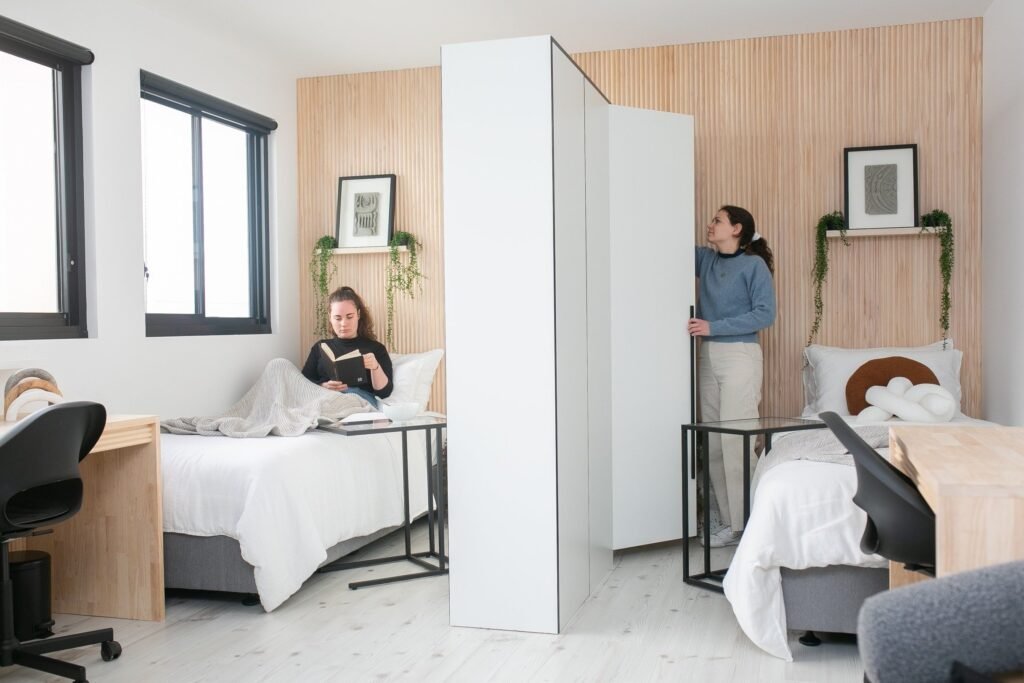
Student co-living works best when everyone feels respected, comfortable, and clear on shared expectations. Good communication, simple routines, and basic consideration go a long way in shared spaces.
Clear communication, shared boundaries, and small daily habits make student co-living easier, calmer, and far more enjoyable for everyone involved.
Key Takeaways
- Set clear expectations early around cleaning, noise, guests, and shared responsibilities.
- Communicate openly with roommates to resolve small issues before they escalate.
- Treat shared spaces as a collective responsibility, not personal storage.
- Respect different routines when living with roommates at university.
- Fully furnished student apartments help reduce stress and simplify shared living.
Moving into shared accommodation is a big step for many students, especially if it’s your first time living away from home. For many students across Sydney, student co-living can be a great way to build independence and community — but only when expectations are clear from the start.
This guide is designed to help students navigate living in shared student accommodation in a practical, realistic way. It’s not about strict rules or perfect behaviour. It’s about everyday habits that make shared living easier for everyone involved.

Why student co-living feels harder than expected
Most co-living problems don’t start with major disagreements. They usually begin with small, repeated frustrations — unwashed dishes, noise at the wrong time, or unclear boundaries around shared items.
We see this often with students who’ve just moved in and are still adjusting, similar to what many experience in the first few weeks outlined in the essential steps for settling into your new home.
Without early communication, small issues can quietly build into tension.
Set expectations early (before problems appear)
One of the most effective things we see in successful shared homes is a simple conversation early on. It doesn’t need to be formal or awkward — just clear.
Cleaning shared areas
Setting expectations around cleaning helps everyone understand how kitchens, bathrooms, and common spaces should be left after use, reducing daily friction in shared living.
Quiet hours on weeknights
Agreeing on quiet times is especially important for students balancing early classes, late study sessions, or part-time work, and helps everyone rest properly.
Guests and overnight visitors
Clear guidelines around guests help avoid awkward situations and ensure everyone feels comfortable and respected in their own home.
What items are shared and what are personal
Clarifying which items are shared and which are personal reduces misunderstandings around food, appliances, and everyday essentials.
Students who have these conversations early generally find living with roommates at university far smoother than those who wait until something goes wrong.
Respect shared spaces as shared responsibility
Shared areas like kitchens, bathrooms, and common spaces are where most co-living tension shows up. A simple rule that works well in shared homes is leaving shared spaces as you’d want to find them.
That means cleaning up after cooking, not leaving personal items everywhere, and being mindful of noise and smells. In co-living student accommodation, these spaces are designed for everyone, so small acts of consideration make a big difference.
This approach aligns closely with the ideas shared in the benefits of community living for international students.
Communicate directly, not passively
When something feels off, it’s almost always better to talk about it calmly rather than let frustration build.
From what we’ve seen, shared homes work best when students:
- Speak directly and respectfully, addressing concerns face-to-face instead of relying on passive messages or silence.
- Address issues early, before small frustrations turn into ongoing tension between roommates.
- Focus on solutions rather than blame, keeping conversations practical and aimed at improving shared living.
Good communication is one of the most important — and often overlooked — parts of student co-living.
Cleanliness is about consistency, not perfection
Everyone has a different idea of what “clean” means. What matters more is consistency.
Shared homes tend to work better when everyone cleans up after themselves, deals with big messes quickly, and follows simple routines for shared areas. This approach feels more realistic than strict cleaning rosters and helps prevent resentment over time.
Be mindful of noise and different routines
When living with roommates at university, schedules rarely line up. Some students study late, others wake up early, and many juggle part-time work.
Being mindful of noise — especially at night — makes shared living far more comfortable. Using headphones, lowering voices during late calls, and giving notice before social gatherings are small habits that show respect.
Shared living doesn’t mean shared everything
Another common source of tension is unclear boundaries around belongings.
It helps to ask before borrowing items, not assume food is shared, and being upfront if something is off-limits. Clear boundaries reduce misunderstandings and make living in shared student accommodation far less stressful.
How studio habits help in shared living
Not every student starts in shared housing. Many move from studios into co-living later.
Bringing student studio apartment ideas into shared homes works surprisingly well. Even in shared apartments, having a clearly organised personal space makes it easier to recharge.
This transition is often smoother for students who understand what’s included in furnished spaces, as we explained in what’s included at Otto stay.
Why furnished spaces make co-living easier
Fully furnished student apartments can significantly reduce the stress associated with shared living. When the essentials are already provided, students can focus on routines and communication instead of setup.
Checking the Amenities page early helps everyone understand what’s shared and what’s personal, reducing confusion and clutter.

Student co-living and international students
For international students, co-living often comes with extra adjustment — new cultural norms, communication styles, and expectations.
We’ve found that students who ask questions early and stay open-minded settle in faster. If you’re new to Australia, the International students page is a helpful starting point for understanding local living expectations and support.
Thinking about shared living that actually works?
Good student co-living isn’t about strict rules. It’s about respect, communication, and choosing a space that supports how students really live.
Our fully furnished student apartments offer both private and shared living options, with amenities that support everyday student life.
You can explore more practical advice and student living guides in the Otto Stay blog.
Shared living works best when the space — and the people in it — are set up for success.
Frequently Asked Questions
What is student co-living?
Student co-living is shared accommodation where students live together and share common spaces like kitchens and bathrooms.
How do you avoid issues in shared student accommodation?
Most issues are avoided by setting expectations early and communicating openly about cleaning, noise, and shared spaces.
Is student co-living suitable for international students?
Yes. From our experience, student co-living helps international students build community faster when expectations are clear.
What makes shared living easier for students?
Clear communication, respect for shared spaces, and living in fully furnished student apartments make shared living much easier.